Posts

Showing posts with the label Facebook

When a news feed no longer feeds news

Image
It's hard to know what last week's Facebook announcements will mean to consumers of news. But, that's largely because Facebook isn't entirely clear where news content will emerge on users' news feeds. (Which now must be called something else.) For a few years, I've asked undergraduates where they get their news. The top response: from social media. (For a while, many said they got their news from Jon Stewart until he departed from The Daily Show faux news desk.) Now that's changing. Last week, Facebook founder Mark Zuckerberg told consumers that the social medium's algorithm would now serve up "friends and family"-generated content ahead of news stories from publishers. The goal, he suggested, is more meaningful interactions -- and, by omission, fewer firestorms erupting from fake news generated by purveyors of pretend news. Why change? Zuckerberg wants no more to do with a cascade of political propagandists. The angry disputes they gen...
Why post this? Don't ask me why

Image
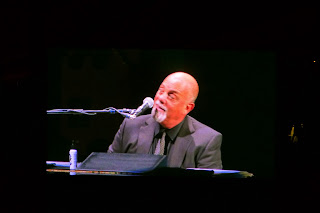
(c) DKassnoff, 2014. Cranking out PR for a legendary rock musician should be pretty straightforward. I'm all but certain Billy Joel has no daily involvement in his website or the Facebook page that updates his new tour dates. Nor should he. Someone's minding those tasks, though. And doing a mediocre job. On Oct. 14, a headline on Billy's web site announced:  Billy Joel Sells Out The New Coliseum’s Opening Show In Less Than Four Minutes. Read the details here . A sellout sure sounds impressive, doesn't it? Maybe, if your time-travelling Delorean is tooling through 1985. Internet ticket sales today have made swift concert sellouts an everyday occurance. And, few would-be ticket buyers are happy about it. They know that concert tickets are scarfed up by ticket bots and scalpers before fans ever get through the lethargic Ticketmaster website. The problem's so severe that several states are enacting legislation to outlaw the bots . But the person ...

A digital tattoo that can't be removed

Image
We all have photos and moments from our past we'd rather forget. They show up online when we least expect them, like an un-scrubbable digital tattoo. On Facebook. On Instagram. On Twitter. Mine aren't as bad as others. I once played John Hancock in a community theatre production of 1776 . And despite my best efforts, a photo of me in that powdered wig surfaces every now and then. (It could be worse; it's not a photo of me with my own hair.) It's a digital shadow I can't elude. But it likely won't affect my professional reputation. Unless it appears on LinkedIn. Jian Ghomeshi photo by Canadian Film Centre from Toronto, Canada (ideaBOOST Launch Pad May 8, 2014) [CC BY 2.0], via Wikimedia Commons I'm better able to move forward from that awkward powdered-wig image than  Jian Ghomeshi, the former CBC radio host whose career imploded when, in 2014, multiple women accused him of harsh sexual behavior. CBC dismissed Ghomeshi from his talk program "Q...

Facebook through a spyglass

Image
I don't do New Year's resolutions. I don't own a smartphone. Which is not to say I don't need self-reappraisal, or that I am not online. I choose when and where I engage, rather than letting devices or media clichés drive my decisions. By Stanislav Kozlovskiy (Own work) [CC BY-SA 4.0], via Wikimedia Commons I recently unfolded a virtual spyglass, and took a long, hard look at Facebook, appraising the social media site and the interactions it offers. PR pros appreciate Facebook's ability to reach a broader audience. We see it as a way to help our messages go viral. 2014's ice bucket challenge wouldn't have achieved its remarkable reach without Facebook. And that's fine. Many of Facebook's other features, however, are less admirable. Quizzes that tell you which words you used most often in your posts? Recycled click-bait stories? Re-shared posts that decry cancer and government ineptitude? Intentionally incendiary political needling mea...

Are you a visual carpet bomber?

Image
By Greg Rakozy (www.instagram.com/grakozy), via unsplash.com More than one friend of mine likes to post photos to Facebook. Photos of their travels. Snapshots from their parties. Lots of photos. Every. single. photo. Like a sky full of stars, that's too much to absorb. What's worse? Often, they're near-identical images -- group shots of three or four people, taken moment by moment, with little change of gesture or expression. Or the dreaded BOH (backs of heads). Not action photos, which might call for a rapid-fire sequence of images. Just group photos. People grinning for the camera. Do we need to see four, five, or six iterations of the same snapshot? No. That's unfair to everyone who follows you. Sure, social media is a visual medium. Visual communications, from infographics to vlogs, are the common currency of the internet. And, one outcome of citizen journalism and the proliferation of smartphone cameras is that people take countless photos. This isn...

Free milk and Band-Aids

Image
This is not a tale about grade school kids, despite the headline. Camille* and I began a conversation at a professional dinner. We hadn't met previously, but I knew the not-for-profit agency she headed. She liked a few things I said about strengthening their external communications, took my business card, and promised to call. Image by Kaz, from Pixabay, via Wikimedia Commons Reaching out to Camille over the next few weeks yielded no response. Then, one night, about eight weeks later, she phoned to ask for ideas to better market her agency's new counseling service. I shared a few thoughts in writing -- it took about an hour -- and she indicated we should meet soon and move toward a working relationship. Nothing happened, even after multiple follow-ups from me. A few months later, around 8 pm on a Friday, Camille called in a panic. An ex-client of the agency was frustrated with its policies, and his unhappy friend posted disparaging remarks on the agency's Facebo...

Visual storytelling? Forget your smartphone

Image
Our local PRSA chapter held its award ceremony last week. Many great public relations campaigns, agencies, and practitioners were recognized. And deservedly so. My Canon camera. By Mohylek (Own work),  via Wikimedia Commons I'd share photos, except I wasn't there. And most of the photos posted on social media by the event's attendees were uniformly awful. Poorly lit, under-exposed snapshots -- the incriminating fingerprint of a smartphone camera that uses a tiny sensor and fires a tiny LED to produce a feeble flash. Or has no flash at all. (I'd link to their pictures, but it's unfair to show colleagues in less than flattering photos.) Footnote: this isn't specific to the Rochester, NY PRSA chapter. I've now seen shots from the Buffalo PRSA Excalibur awards event; they aren't any better, and in some cases, look no better than any after-party selfies you've seen. Listen, I get it. People don't want to carry two devices. A stand-al...

Sounding off on weighing in

Image
Every day, at least one of the news sources I follow on Facebook posts a link to a non-local story, accompanied by the invitation: WEIGH IN. Or SOUND OFF. Or the ever-popular: WHAT DO YOU THINK? And I think: Go enterprise a real news story. The internet has enough rude, unmoderated comments. The best reporting requires a little hustle on the part of reporters and editors. Ambition. Moxie. The best reporters do this, time and again. But in a Facebook world, it's not enough to report news. TV news affiliates -- and some print-based media online -- now try to augment the good work of reporters and goose their Facebook traffic numbers by inviting followers to "sound off" or "weigh in." This is less vox populi than it is a blanket invitation to banter. Media consultants tell TV and radio outlets they need to "engage" their audiences via social media. Thoughtful online discussions would be one way. But asking viewers to leave under-informed ...

How not to use social media in PR

Image
Social media and public relations can work quite well together. If you know what you're doing. Trouble is, if Kelly Brady’s your expert on the topic, grab a parachute. Now. Your plane's on autopilot and you’re about to smack a mountaintop.  Howcast.com posted a 2013 video with Ms.Brady expounding on the value of social media in PR. And very little of it has any basis in how social media really works for most PR pros. Publicist Kelly Brady Note: Ms. Brady believes landing a story in the New York Post is a good PR hit. If that's your paper of record, then her advice might be worth following -- if your client loves Page Six. (Learn more about Ms. Brady here .) Here are excerpts of her pearls of wisdom: “Social media is relatively a new tool in public relations.” Sure, if you’ve been living the hard-partying life since 2009. By then, Facebook had more than 100 million users. Today, it’s close to 1.4 billion users. “Creating a buzz about the account...

Facebook is PR for the rest of us

Image
I don't do resolutions. Unless I'm performing as John Hancock in a community theatre production of "1776." But for 2015, I have a modified mindset regarding social media. What I read about my friends on Facebook is not their real lives, and I'm not going to compare my life to theirs. Your Facebook friends will post their successes, their celebrations, family photos, and maybe snarky comments about Kardashians and Biebers. Those friends are less likely to post about their cramps. Their firings. Their financial losses. Their private addictions. Queen, c. 1985, by Thomas Steffan (Own work) [GFDL (http://www.gnu.org/copyleft/fdl.html), CC-BY-SA-3.0  (http://creativecommons.org/licenses/by-sa/3.0/) via Wikimedia Commons What we see on Facebook and other social media are a kind of PR version of their lives. Their "best of" experiences. It's like a CD of Queen's  Greatest Hits . You'll hear "Crazy Little Thing Called Love" and...

Embracing hyperspace, or not

Image
A headline that failed: "have you embraced the new Instagram Hyperspace app yet?" By Braden Kowitz (Hugs!) [CC-BY-SA-2.0 (http://creativecommons.org/licenses/by-sa/2.0)], via Wikimedia Commons Seriously? Embraced ? First: you can call Instagram an app if you wish, but that's a misnomer. It's a thief. When you post an image, the metadata in your photo tells Instagram (and its corporate overlord, Facebook) where and when the image was created. Algorithms comb the image for clues about your buying habits and likes. The image's information becomes something InstaFacebook can re-sell to marketers. I don't embrace thieves. If anything, InstaFacebook has you in more than an embrace. It's got you in a headlock. Second, Hyperspace: compressed time-lapse videos that make the best footage look like it went through a cappuccino machine. I could do this with a $75 digital camera, but I prefer high-quality videos that lovingly showcase my scenes,...

Seeing isn't believing anymore

Image
Photojournalists have been fired for altering news photos. Public relations people disseminate art-directed, staged, or Photoshopped publicity photos. Somewhere in-between: crowdsourced photos used online by news media. Local TV and newspaper staffs are pretty lean, so they solicit photos from viewers and readers. Asking readers and viewers to send photos is a handy way to engage your audience but there's risk involved. A scheming news junkie with a smartphone could contrive an image, although most editors are wise enough to spot a faked photo. But what happens when a news outlet alters a submitted news photo for no apparent reason? Look carefully at these two images, posted by two competing TV news outlets on their websites. Both show a burning car, from which the driver was rescued. A closer look reveals a subtle alteration between the two shots. For unexplained reasons, the first news outlet omitted the license plate numbers. The second news channel ran the photo with...

My kind of town and the truth

Image
By (WT-shared) Inas at wts wikivoyage  (Own work) [Public domain], via Wikimedia Commons If you're a CEO, President, Executive Director, etc. -- or one day wish to be -- please read this message from the head of Raindrop Products. It's a perfect example of how to treat customers, take responsibility, spell out a path forward, and do public relations around a thorny problem: Dear Citizens of Webster, Earlier this year the town of Webster officials made a decision to provide a new Spray Park on the grounds of the Webster Recreation Center. In addition to providing the citizens with a new community gathering place offering a fun, safe aquatic play experience, the officials decided to honor the town’s police officers and firefighters by theming this spray park with custom made spray toys with a “first responders” theme.  The purchase order was issued for the manufacturing of the custom made pieces with the hopes of having the equipment in place for a July 4th Grand ope...

The Facebook Diet (or Listening with Intent)

Image
Last week, except for a few Fathers' Day photos, I didn't post on Facebook. You could say I went on a Facebook diet. Cut out the starchy, empty carbs (also known as "clickbait.") Got away from the screen, took longer walks. De-listed myself from pointless pages I'd once liked. I did share a few responses to others' posts on Facebook. But for seven days, I refrained from sharing links to other stories and videos, or leaving pseudo-pithy observations of my own. Mostly, I eavesdropped on the din of discourse on the world's largest gossip website. What happened when I stepped back from the "scream of consciousness" of Facebook? I spent less time fretting over what to post. No pontificating on the missteps of public figures. No hunting for decades-old snapshots for "Throwback Thursday." And, I got more stuff done. I thought friends would take note of my absence, message me, and ask if I were OK. I was mistaken. I blew past th...

Great PR photos: it's not about the camera

The most important tool to get usable PR photos isn't a $5,000 digital SLR camera. Or a camera phone. Or some in-between device, like a point-and-shoot digital camera. It's your brain. The thinking machine between your ears.  Yes, I can tell you about tiny imaging sensors that capture grainy, disappointing photos. Or how any bright light source you see on your smartphone's screen will trick the camera into under exposing the shot, making faces dark and unrecognizable. Or how that tiny flash won't light up anything further than six feet from your lens. But you won't care. Or won't remember. So, instead, let's talk about your brain, and how it ought to think about PR photos. It should ask three questions, well before you decide that photos of a PR event would be good to have: 1. How quickly does the world need to see these photos? 2. Where will these photos be used? 3. What message will the photos say about your brand? First, how q...

Hearing the light from the window

Image
A Monkee has taught me plenty about Facebook. And how we're viewing the social media juggernaut all wrong. We use it for product publicity. Or as an online chronicle of our everyday musings. And, we're missing the point. Facebook isn't a journal. It's not about news. It's about sifting information about you and selling it to Purveyors of Other Stuff. In exchange for allowing us to post recipes or fuzzy smartphone photos, Facebook sifts and parses our comments for clues about us. As we share our opinions or lunch menus, Facebook neatly packages that information and re-sells it to marketers. Maybe Facebook is a useful mechanism for public relations professionals who want their clients' views and products shared. On its own, Facebook isn't an all-inclusive PR strategy. Those "which rock musician are you" quizzes tend to muck up the sharing process. Your posts are arbitrarily ranked by Facebook's software, meaning they may not show up in your...

Automating misinformation on LinkedIn

Image
LinkedIn wants to be the business equivalent of Facebook. Too often, however, it's the social media version of McDonalds, with no room for individual preferences of its customers. By Nan Palmero from San Antonio, TX, USA (Linkedin Chocolates   Uploaded by JohnnyMrNinja) [CC-BY-2.0 (http://creativecommons.org/licenses/by/2.0)], via Wikimedia Commons LinkedIn's frequent automated emails are triggered by minor updates to a user's profile. Many LinkedIn members tweak their profiles to reflect new skills or achievements. The site uses these minor updates to generate automated "say congrats" emails that may boost its traffic. ("Congrats" is the lazy person's way of saying "congratulations," "way to go," or some more-authentic kindness.) It's true that I've recently branded what I've been doing for more than a year as "DSK Writing and Communications." I didn't get a new job. However, you may get an...

Don't fiddle around with business blogging

Image
Last week, this blog outlined the benefits of enlisting a PR professional to produce your business blog. When you share industry insights and winning strategies, your blog can be an effective instrument in your overall marketing ensemble. Writing and maintaining a blog is only half of the job. You also need a strategy to promote it. You can-- Link to your blog from your website.  Reference it in a Twitter post or LinkedIn user group.  Bring it to the attention of a Paper.li editor. Include links in your Constant Contact email.  Maybe even send out a news release. (How  retro .) Your blog is one instrument in your marketing ensemble. And yes, tell your friends. Should you use Facebook, Tumblr, and Pinterest to draw readers to your blog? It's a tough call. Facebook, first and foremost, is a social network. Your friends are sharing family photos, cat humor, vacation photos, and the musings of George Takei. There's a chance they'll enjoy looking at your ...

Your lengthened shadow is online

Image
Ralph Waldo Emerson said that an "institution is the lengthened shadow of a man." Biographers sometimes use the phrase to describe titans of 20th century industry -- George Eastman, Henry Ford, etc. -- whose personal imprint lived on in their companies after they passed. Today, viewed through a PR lens, I view your personal brand online  as your lengthened shadow. Like a shadow, it follows you and says things about you that you don't verbalize. This is especially true when you create a Facebook or Twitter account -- and do nothing with it. Twice this week, I've looked up executives' pages on Facebook to try to learn more about them. Yes, I know -- I should be finding them on LinkedIn, where business connections override social contacts. But Facebook garners the most traffic of social media sites. And people often share opinions and stories on Facebook that offer some insights on their interests. Plus, I was curious to see how these women, both recognizable i...

Getting your arms around road show photos

Image
A marketing communications executive is doing a "road show." Marv and his team are holding learning events for customers in different cities, combining useful seminars and workshops with a little client hospitality. A major ingredient of public relations is, in fact, food and relaxation. It's a great way to build relationships. Hand out all the screen-wipes and memo clips you like, but most clients and business partners enjoy a beverage, snacks, and some chit-chat in an atmosphere without white boards. What's wrong with this scenario? The marcom exec leading this adventure occasionally posts photos of himself relaxing with co-workers. Most of whom appear to be happy women. Sometimes, there's hugging or arms-around-a-shoulder. And, as smart as I know Marv is, I keep asking: "Doesn't he know the message these snapshots send?" The Clock of Nations at Rochester NY Airport The message I get from his photos: Marv's having too much fun on hi...