Posts

Showing posts with the label news

When a news feed no longer feeds news

Image
It's hard to know what last week's Facebook announcements will mean to consumers of news. But, that's largely because Facebook isn't entirely clear where news content will emerge on users' news feeds. (Which now must be called something else.) For a few years, I've asked undergraduates where they get their news. The top response: from social media. (For a while, many said they got their news from Jon Stewart until he departed from The Daily Show faux news desk.) Now that's changing. Last week, Facebook founder Mark Zuckerberg told consumers that the social medium's algorithm would now serve up "friends and family"-generated content ahead of news stories from publishers. The goal, he suggested, is more meaningful interactions -- and, by omission, fewer firestorms erupting from fake news generated by purveyors of pretend news. Why change? Zuckerberg wants no more to do with a cascade of political propagandists. The angry disputes they gen...

Give it to me straight

Image
If you're a PR professional, you may disagree with me. And I'd love to hear your viewpoint. Six months ago, a local acquaintance asked me to help promote his book on business leadership. Most news media I contacted were enthusiastic, interviewing him on air, including his book in a newspaper column, or running op-ed essays he'd written about business conduct. By Holger.Ellgaard (Own work) [CC BY-SA 3.0  (http://creativecommons.org/licenses/by-sa/3.0)],  via Wikimedia Commons Except one. An experienced news/public affairs broadcaster who initially expressed interest, asked to read a copy of the client's book, and then went silent. Didn't respond to emails or phone calls. Even when I asked co-workers at the broadcaster's station, who first said they'd been busy, and told me he'd get back to me. Except he didn't. Nor did his producer.  I hate giving up. But, after six months of unresponsiveness from the broadcaster, I decided to ce...

What's Spanish for "shoot yourself in the foot"?

Image
After having written about Chipotle restaurants' PR crises several times in the past year, I pledged I wouldn'tgo back to that trough again.  Yet, there's more negative news today about the beleaguered eatery. So, I'll just let the New York Daily News do the talking. This calls for more than a simple re-branding. How do you say "Leadership Change" in Spanish?

Remember tronc? I'm not the only one.

Image
By LuckyLouie at English Wikipedia [Public domain], via Wikimedia Commons In a prior blog post , I decried the jargon-packed news release that introduced "tronc," the befuddled new name for Tribune Publishing. I wasn't the only one who thought: "What are these people trying to say?" NPR ran a story about it this morning. You can hear it here.  The tronc CEO makes a point, I guess. But it's still not a brand strategy I'd embrace if I needed to promote my editorial content.

In praise of homegrown news (the survival of weekly papers)

Image
My first full-time reporting job came from a small weekly paper on Long Island. Called Suffolk Life, the paper served as the launch pad for the careers of a number of superb journalists and scholars . And me. No one becomes wealthy working at a weekly paper. Because he couldn't pay me very much, the publisher, the late great Dave Wilmott , Jr., allowed me to gas up from the same ancient Esso-esque pump that filled his delivery trucks. A few years later, as a public relations practitioner, I continued my appreciation of weeklies, especially when promoting lifestyle products and how to use them. My rationale: place a story in a daily paper, and that edition will likely be discarded when the next day's paper arrives. Place the same story in a weekly, and that paper lives in readers' homes for a full week before its replacement shows up. I get seven chances to grab your attention, not just one. Local weeklies. (c) DKassnoff, 2016. Today, Suffolk Life is out of busin...

Lazy news: expressway to obsolescence

Image
Public relations people are accustomed to news outlets using only a portion of their news releases. Often, editors and producers publish only the essential facts, just enough to fill a news hole. Paul Hermans from nl [GFDL (http://www.gnu.org/copyleft/fdl.html)  or CC-BY-SA-3.0, from Wikimedia Commons When broadcast news producers do this, they often direct viewers and listeners to their websites for the fuller story. This saves air time or news print. But, when there's only a truncated version of the information, it tells me I'm a victim of lazy journalism . One example: a recent news item from New York Governor Andrew Cuomo, announcing $35 million in construction grants to a number of private colleges.  One Rochester TV station's online story listed an incomplete handful of colleges receiving these funds, including Rochester Institute of Technology. Emphasize the local angle? Sure. Except several other local colleges -- among them St. John Fisher College ...

Is Snapchat a storytelling tool?

Image
I'm struggling to figure out how Snapchat fits in a public relations strategy. This may be akin to By Snapchat, Inc. (https://twitter.com/Snapchat) [Public domain], via Wikimedia Commons asking your grandfather to join Instagram. Admission: I'm in learning mode with Snapchat. The app peered into my device's address book, and served up two names of contacts with Snapchat accounts. I haven't spoken to these individuals in more than a year. And neither are people with whom I'd want to share images from my daily life. (Aside: while writing this blog, I had to force my fingers to type "Snapchat" and not "snapshot." Old habits die hard.) But a colleague tells me Snapchat is a viable marketing communications platform for her needs. She works in undergraduate admissions, and is using a version of a university mascot to promote followers for the university on Snapchat. In the battle for hearts of prospective young enrollees, a plush-toy ani...

How to know when you're being baited

Image
I seldom venture into politics or commentary about candidates for political office. This is a brief exception. News editors, I'm talking to you. Do you realize that when Donald Trump says something incendiary about some non-U.S. nationality, he's baiting you? When you keep re-playing his offensive comments about Mexican citizens, you give him more exposure than, say, ANY CANDIDATE WHO'S ACTUALLY GOVERNED? Substitute image to be used in place of any photo of Donald Trump. P.T. Barnum wasn't available. When you report on corporations backing out of deals with Trump, that's only slightly newsworthy. Companies end business dealings all the time. When Kodak collapsed into bankruptcy, major deals with Target, Wal-mart, Disney, and the PGA Tour went away. The backlash over Trump's remarks made his torn-up contracts mildly more interesting, but not deserving of the air time and web content you're handing over to him. Donald Trump is a very expens...

Sounding off on weighing in

Image
Every day, at least one of the news sources I follow on Facebook posts a link to a non-local story, accompanied by the invitation: WEIGH IN. Or SOUND OFF. Or the ever-popular: WHAT DO YOU THINK? And I think: Go enterprise a real news story. The internet has enough rude, unmoderated comments. The best reporting requires a little hustle on the part of reporters and editors. Ambition. Moxie. The best reporters do this, time and again. But in a Facebook world, it's not enough to report news. TV news affiliates -- and some print-based media online -- now try to augment the good work of reporters and goose their Facebook traffic numbers by inviting followers to "sound off" or "weigh in." This is less vox populi than it is a blanket invitation to banter. Media consultants tell TV and radio outlets they need to "engage" their audiences via social media. Thoughtful online discussions would be one way. But asking viewers to leave under-informed ...

A good story never dies

Image
A professional organization had news to share: one of its members had recently earned a U.S. patent for a breakthrough, and they asked a PR practitioner to help publicize the patent. The response? "Oh, we did that story five years ago. Maybe we can just write a blog post." Diego Grez [CC BY-SA 3.0 (http://creativecommons.org /licenses/by-sa/3.0)], via Wikimedia Commons True, the inventor had applied for a patent more than five years ago. It wasn't exactly a new story. Patents often take years between filing and approval. But the PR person's dismissive reply neglects a few of today's realities. There wasn't a vast social media universe to sell that story, five years ago. There wasn't the intense industry focus on this particular technology that exists today.  And many of the people who could take advantage of the new technology were still undergraduates. And today's journalists who'd cover the story might find it all-new. Th...

Seeing isn't believing anymore

Image
Photojournalists have been fired for altering news photos. Public relations people disseminate art-directed, staged, or Photoshopped publicity photos. Somewhere in-between: crowdsourced photos used online by news media. Local TV and newspaper staffs are pretty lean, so they solicit photos from viewers and readers. Asking readers and viewers to send photos is a handy way to engage your audience but there's risk involved. A scheming news junkie with a smartphone could contrive an image, although most editors are wise enough to spot a faked photo. But what happens when a news outlet alters a submitted news photo for no apparent reason? Look carefully at these two images, posted by two competing TV news outlets on their websites. Both show a burning car, from which the driver was rescued. A closer look reveals a subtle alteration between the two shots. For unexplained reasons, the first news outlet omitted the license plate numbers. The second news channel ran the photo with...

Great PR photos: it's not about the camera

The most important tool to get usable PR photos isn't a $5,000 digital SLR camera. Or a camera phone. Or some in-between device, like a point-and-shoot digital camera. It's your brain. The thinking machine between your ears.  Yes, I can tell you about tiny imaging sensors that capture grainy, disappointing photos. Or how any bright light source you see on your smartphone's screen will trick the camera into under exposing the shot, making faces dark and unrecognizable. Or how that tiny flash won't light up anything further than six feet from your lens. But you won't care. Or won't remember. So, instead, let's talk about your brain, and how it ought to think about PR photos. It should ask three questions, well before you decide that photos of a PR event would be good to have: 1. How quickly does the world need to see these photos? 2. Where will these photos be used? 3. What message will the photos say about your brand? First, how q...

Don't fiddle around with business blogging

Image
Last week, this blog outlined the benefits of enlisting a PR professional to produce your business blog. When you share industry insights and winning strategies, your blog can be an effective instrument in your overall marketing ensemble. Writing and maintaining a blog is only half of the job. You also need a strategy to promote it. You can-- Link to your blog from your website.  Reference it in a Twitter post or LinkedIn user group.  Bring it to the attention of a Paper.li editor. Include links in your Constant Contact email.  Maybe even send out a news release. (How  retro .) Your blog is one instrument in your marketing ensemble. And yes, tell your friends. Should you use Facebook, Tumblr, and Pinterest to draw readers to your blog? It's a tough call. Facebook, first and foremost, is a social network. Your friends are sharing family photos, cat humor, vacation photos, and the musings of George Takei. There's a chance they'll enjoy looking at your ...

How Not to do PR

The news release found at  http://www.myprgenie.com/view-publication/pillsincartcom-stands-out-as-a-trusted-generic-online-drugstore  should give chills to anyone who purports to write for a living. It's poorly written ("online pharmacies on the internet" -- where else would an online pharmacy be found?). Verbs and nouns don't agree. Its dateline sounds like an apartment complex address, rather than a city. And when the release diverts from talking about drug safety of sorts to the commissions available for resellers, it just becomes an utter mess. Who's at fault? The author of the release is an easy target. But MyPRGenie.com should shoulder much of the blame. They promise to get your news release to thousands of editors -- most of whom will laugh at the poor writing. MyPRGenie.com should provide some editorial counsel. Writing an effective news release takes skill, and Pillsincart.com's writer clearly needs help.   English can be tricky. That's why hiring...

There are no PR genies

Image
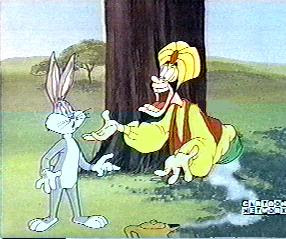
There are no magic lanterns. No PR genies. No write-it-for-you software or apps. Nothing is going to create a readable news release or public relations pitch for you -- except someone whose skill set includes newswriting, storytelling, editing, and interviewing. I often teach university-level public relations courses. And, when I'm looking for examples of unedited, clumsily crafted news releases published online, my first stop, inevitably, is MyPRGenie.com.  Smokey the Genie (right) with Bugs Bunny MyPRGenie bills itself as a one-stop resource for PR support, including blogs, search engine optimization, and hosting online newsrooms. All are useful in today's PR universe. They may be better at some services than others. But I tremble whenever I find news releases -- often written by someone with, ah, less-developed writing skills -- that find their way online with virtually no editing or attention to what an editor will read. One recent verbatim example: ...