Posts

There are no PR genies
Image
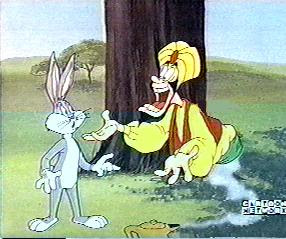
There are no magic lanterns. No PR genies. No write-it-for-you software or apps. Nothing is going to create a readable news release or public relations pitch for you -- except someone whose skill set includes newswriting, storytelling, editing, and interviewing. I often teach university-level public relations courses. And, when I'm looking for examples of unedited, clumsily crafted news releases published online, my first stop, inevitably, is MyPRGenie.com.  Smokey the Genie (right) with Bugs Bunny MyPRGenie bills itself as a one-stop resource for PR support, including blogs, search engine optimization, and hosting online newsrooms. All are useful in today's PR universe. They may be better at some services than others. But I tremble whenever I find news releases -- often written by someone with, ah, less-developed writing skills -- that find their way online with virtually no editing or attention to what an editor will read. One recent verbatim example: ...

Photography made difficult

I don't have an Instagram account. But I have friends in the public relations industry who do, and use them often. They're smart professionals. So I assume they realize that Instagram doesn't make money by hosting their gee-whiz edited photos of their trip to Savannah. It makes money by harvesting data from photos, including the metadata it contains. Your smartphone's camera adds metadata to your photos. It knows where and when you captured the photo. The exposure, the brand of camera, etc. And I'm certain Facebook -- owners of Instagram, you'll recall -- understands how to sift out important information from your photos. And re-sell that information to its advertisers. The PR business is about influencing people's attitudes. What do you and I care about? How can PR people and marketers use that knowledge to influence users' attitudes and behaviors? I'm not a fool. Google does this sort of data-mining with all my searches. When I was looking ...

Making the Deen list

Image
Blame Paula Deen's implosion on a slow news cycle. And no PR strategy for dealing with criticism. The absence of legislative newsmakers this week -- the Supreme Court killed DOMA and left for the summer -- leaves an overabundance of unspent media wattage. Where did it turn? On TV food celebrity Paula Deen. In a few short days after the disclosure that Ms. Deen had used the "N" word, she's been ditched by Wal-Mart, Ballantine Books, The Food Network, and Smithfield Farms. And probably had her Exxon-Mobil card cancelled. (Curiously, you can still obtain Ms. Deen's recipes on the Food Network's website.) Here's a different perspective: Everyone over age 30 has used the "N" word. Everyone. Often in jest. View Mel Brooks' 1974 comedy "Blazing Saddles," and you quickly lose count of the number of times it's used. (Borrow a DVD; when it airs on cable, every potentially offensive word has been bleached from the film.) Ms...

Getting your arms around road show photos

Image
A marketing communications executive is doing a "road show." Marv and his team are holding learning events for customers in different cities, combining useful seminars and workshops with a little client hospitality. A major ingredient of public relations is, in fact, food and relaxation. It's a great way to build relationships. Hand out all the screen-wipes and memo clips you like, but most clients and business partners enjoy a beverage, snacks, and some chit-chat in an atmosphere without white boards. What's wrong with this scenario? The marcom exec leading this adventure occasionally posts photos of himself relaxing with co-workers. Most of whom appear to be happy women. Sometimes, there's hugging or arms-around-a-shoulder. And, as smart as I know Marv is, I keep asking: "Doesn't he know the message these snapshots send?" The Clock of Nations at Rochester NY Airport The message I get from his photos: Marv's having too much fun on hi...

Taking my own advice

You'll notice I've revamped the design of this blog. I wanted to improve readability, and while the white text-on-black looked cool, those long rivers of san serif text bothered my eyes. Readability is the key here. A local company briefly flirted with a design aesthetic they called "black fade." This looked good in some collateral, but when it migrated to the LCD screens of its products, it was like viewing information through a $3 telescope. It appealed to younger demographics, for a time. But editorial critics quickly re-christened it "fade to black." This collided with a financially bleak period for the company, and the departure of the marketing swami who pushed it forward. Black fade is no more. Happy Reading!

Readers want to hold and fold

Image
My earliest PR successes came from creating newsletters for business-to-business clients, alumni, and employees. These publications -- semi-weekly, monthly, and quarterly -- each helped grow relationships between my clients and their constituents (customers). And none of them exist today. Casualties of the digital age? In some ways. In the 1980s, desktop publishing gave almost everyone the power of the press. And some resulting newsletters were ghastly, much like some of today's blogs. But, as the internet grew, printing and mailing costs increased, and managers and marketers switched to online content: e-newsletters, or some other digital solutions. Those managers overlooked an important factor: their audiences . People who view a newsletter as an emblem of a relationship. They're accustomed to physical connections, and willingly invest their resources and time to support those relationships. After spending their workday staring at an optically challenging computer scree...

Social couponing and the Sundance Kid

Image
In my favorite film, Butch Cassidy and the Sundance Kid, there's a scene where the heroes step off a train at a rural town in Bolivia. Sundance takes a few steps into the plaza, and promptly steps into cow dung -- while Butch extols how much more they can buy with their stolen dollars and pesos. Sundance surveys the run-down plaza, looks at Butch, and says: "What could they have here that you'd possibly want to buy?" The scene comes to mind (minus the cow dung) every time I get an email from AmazonLocal, Groupon, or LivingSocial. Each of these online deal aggregators uses the power of social networking and deal-making with retailers to offer half-price deals to members. Call it social couponing. Ninety percent of these deals are things I would never, ever buy. Even after I've customized my Groupon settings. I've purchased one or two of these offers. The majority, however, are for goods or services I don't find valuable. Is this a $20 burger? O...